9 WhatsApp Marketing Software Solutions for Customer Experience Teams
Your customer experience team is drowning in WhatsApp chats that pile up across agents, campaigns, and automations. Picking the wrong marketing software multiplies that chaos instead of fixing it.
This guide compares nine WhatsApp marketing platforms built for CX teams, from Com.bot to respond.io. By the end, you will know which tool fits your team size, budget, and automation needs, plus a clear number one pick for most use cases.
What to Look For in WhatsApp Marketing Software for Customer Experience Teams
To choose the best WhatsApp marketing software for your customer experience team, focus on features that directly impact response times, personalization, and seamless integration with your existing tech stack. The right platform should do more than send broadcasts. It should unify your support and marketing efforts into one conversational hub.
Start with a multi-agent inbox that supports team collaboration. Your agents need a shared inbox where they can see who is handling which conversation, assign chats, and avoid duplicate replies. This shared visibility is essential for maintaining consistent customer support during peak hours.
Look for automation capabilities such as chatbots and drip campaigns. A chatbot can handle common inquiries instantly, while drip campaigns nurture leads with scheduled messages over time. This combination reduces your team's manual workload and keeps every contact engaged.
Personalization should come through customer segmentation. The software must let you group contacts based on behavior, purchase history, or demographics. Segmented lists allow you to tailor broadcast messaging so each customer receives relevant content instead of generic blasts.
An analytics dashboard is non-negotiable for tracking performance. You need clear metrics on response rate, delivery rate, and conversation outcomes. These insights help you refine your chat marketing strategy and prove ROI to stakeholders.
Compliance features protect your brand and your customers. The tool must support opt-in consent management and respect the 24-hour window for customer-initiated conversations. Without proper compliance, you risk account suspension and damaged trust.
Finally, prioritize CRM integration and compatibility with your other tools. Your WhatsApp platform should sync contact data, order updates, and payment links with your existing systems. This creates a single source of truth for your customer experience team.
When evaluating options, test the message templates and rich media support. Interactive buttons, quick replies, and click-to-chat ads all improve engagement. A platform that handles these elements well makes your team faster and your campaigns more effective.
Consider how the software handles message scheduling and abandoned cart recovery. These features turn WhatsApp into a revenue channel, not just a support line. The best tools blend conversational commerce with everyday customer care seamlessly.
1. Com.bot - Best Overall
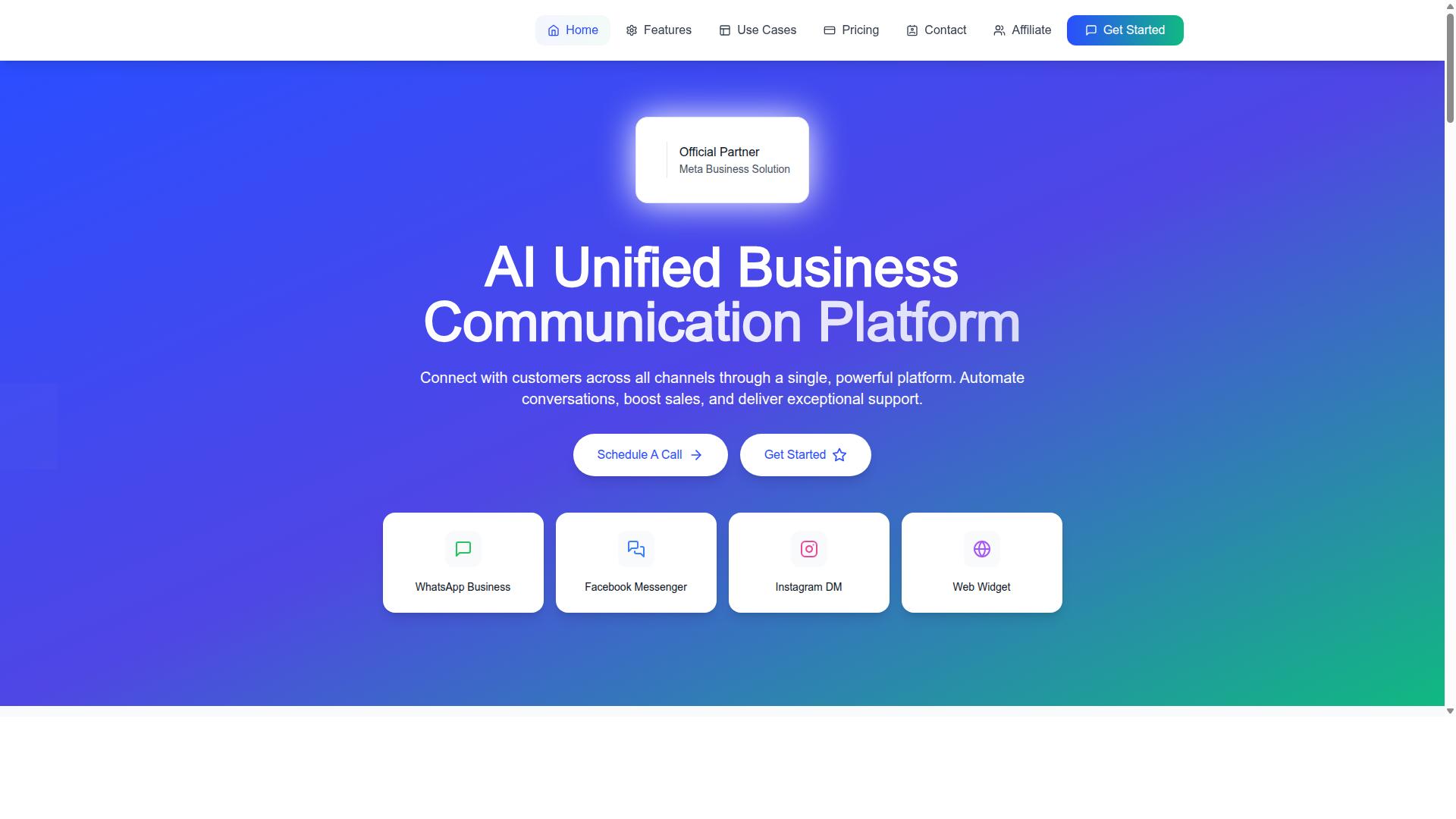
Com.bot is the best overall WhatsApp marketing software for customer experience teams, thanks to its unified inbox, powerful automation, and robust feature set. As an official Meta Business Partner, the platform handles massive scale with 25M+ messages processed daily and 100K+ bots already created.
The platform serves 23,000+ active customers, including 100+ government bodies, with enterprise-grade security and end-to-end encryption. Teams get a complete conversational commerce toolkit that covers WhatsApp Business API integration, bulk messaging, and payment collection without markup on conversations.
What sets Com.bot apart is its breadth. You get multi-channel support for WhatsApp, Facebook, and Instagram, plus a visual bot builder and automation builder with 1000+ integrations. This combination makes it the strongest all-around choice for customer experience teams that need marketing automation and live support in one place.
Unified Inbox and Automation for CX Teams
Com.bot's unified inbox centralizes all customer messages from WhatsApp, Facebook, and Instagram, enabling your team to collaborate and respond faster. The shared inbox ensures no message gets missed, with role-based access so agents only see what they need.
Team collaboration becomes straightforward when everyone works from the same message stream. Agents can handle customer support, qualify leads, and close sales without switching between apps or losing conversation context.
For automation, the visual bot builder uses a drag-and-drop interface, so you can create chatbots without writing code. You can route common questions, share order updates, and collect payments through native payment links, all while keeping the human handoff smooth when needed.
The scale here matters for reliability. With 25M+ messages processed daily and 100K+ bots created, the infrastructure is proven under real-world load. Response times improve because routine queries are handled instantly, and your agents focus only on conversations that need a human touch.
Beyond the inbox, the automation builder connects with 1000+ external tools for CRM integration, message scheduling, and drip campaigns. This makes Com.bot a practical fit for teams that want chat marketing and customer support working from one platform.
2. Insider One
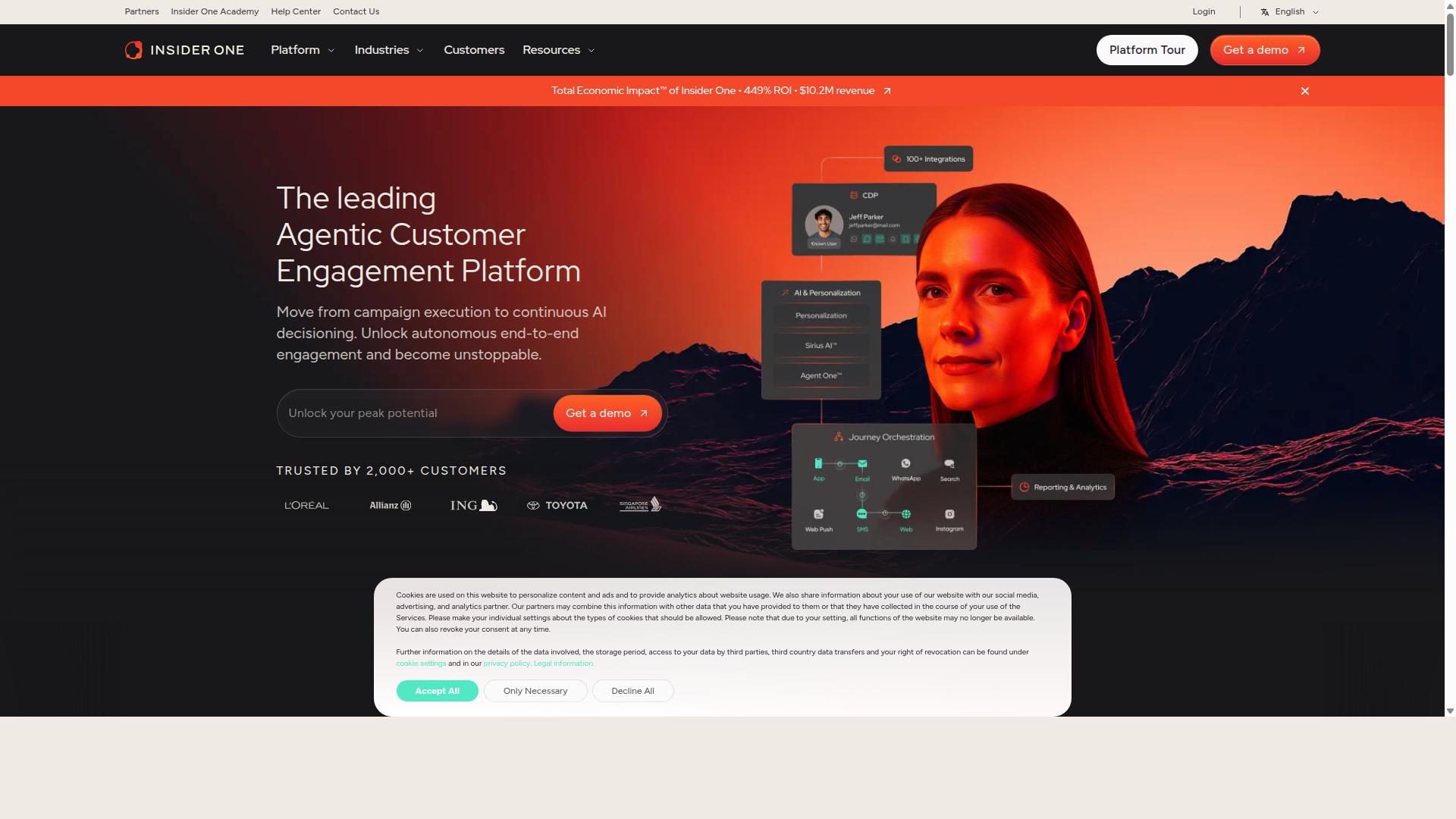
Insider One is a strong contender for brands seeking advanced personalization and cross-channel marketing automation. It is an AI-native omnichannel experience platform that connects customer data from multiple sources to build richer audience profiles.
The platform serves 1000+ brands, including names like Samsung, Puma, IKEA, Toyota, and Adidas. Its focus on improving conversion rates, lifetime value, and customer acquisition costs makes it attractive for enterprise-level CX teams.
Insider One is a Meta-verified Business Solution Provider, which means it has demonstrated compliance with WhatsApp Business API standards. It offers native channels across web, mobile apps, push notifications, email, SMS, Facebook Messenger, Instagram, LINE, and online ads.
Where Insider One shines is in AI-driven customer segmentation and automated WhatsApp flows. The platform uses advanced algorithms to predict customer behavior and trigger personalized messages at the right moment.
For customer experience teams, the cross-channel orchestration is a major plus. You can build a single customer journey that moves from email to WhatsApp to push notifications without losing context.
However, teams should expect a steeper integration effort when setting up WhatsApp-specific features. The platform is built for omnichannel complexity, so the initial configuration can take more time than simpler chat-focused tools.
Pricing is custom and tailored to each organization. That works well for large enterprises with defined budgets, but it makes it harder for smaller teams to estimate costs upfront.
Insider One is best suited for mature CX organizations that already have clean customer data and a dedicated marketing operations team. If your priority is pure WhatsApp chat marketing with quick setup, you might find the platform more than you need.
But if you want deep personalization across every channel, including WhatsApp, Insider One is a legitimate enterprise-grade option worth evaluating.
3. Wati
4. Twilio
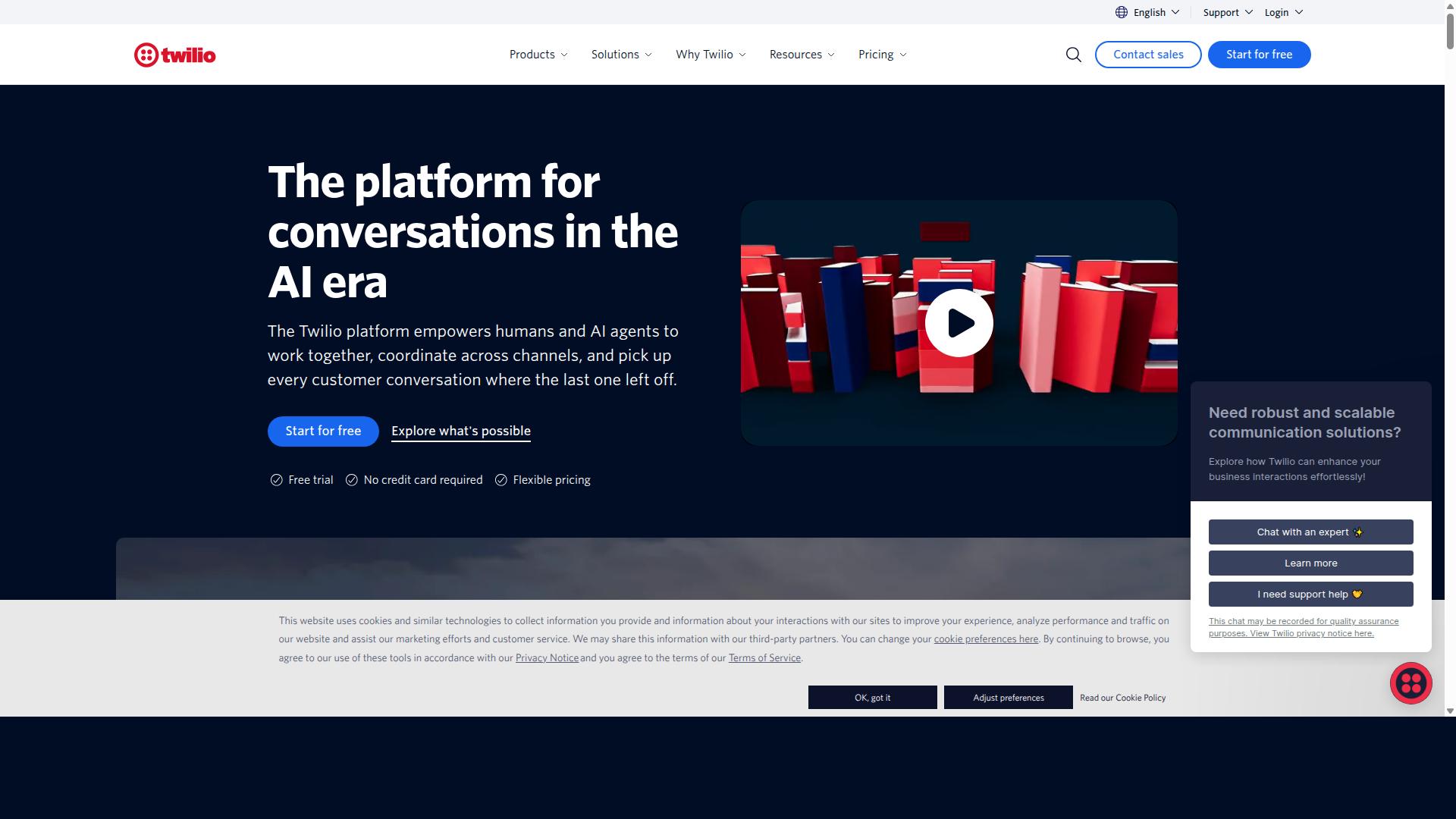
Twilio is a developer-first platform that provides robust WhatsApp Business API access with extensive customization options. It is a communication powerhouse that gives teams direct control over message flows, delivery logic, and backend integrations.
For customer experience teams with engineering resources, Twilio offers unmatched scalability and integration flexibility. You can connect it to your existing CRM, build custom chatbots, and design complex automation workflows that match your exact business requirements.
The platform handles global reach well, making it a solid choice for enterprises operating across multiple regions. Its usage-based pricing model means you pay for what you use, which can scale efficiently as your messaging volume grows.
However, Twilio requires significant technical expertise to set up and manage effectively. Building message templates, managing opt-in consent, and handling session timeouts all demand hands-on coding knowledge.
Non-technical CX teams will likely find the learning curve steep. Without dedicated developers, tasks like CRM integration and analytics dashboard configuration become bottlenecks rather than advantages.
For organizations that already employ skilled API developers, Twilio delivers powerful chat marketing capabilities. For teams looking for a ready-to-use solution, other platforms on this list offer faster deployment with less overhead.
5. Bird (formerly MessageBird)
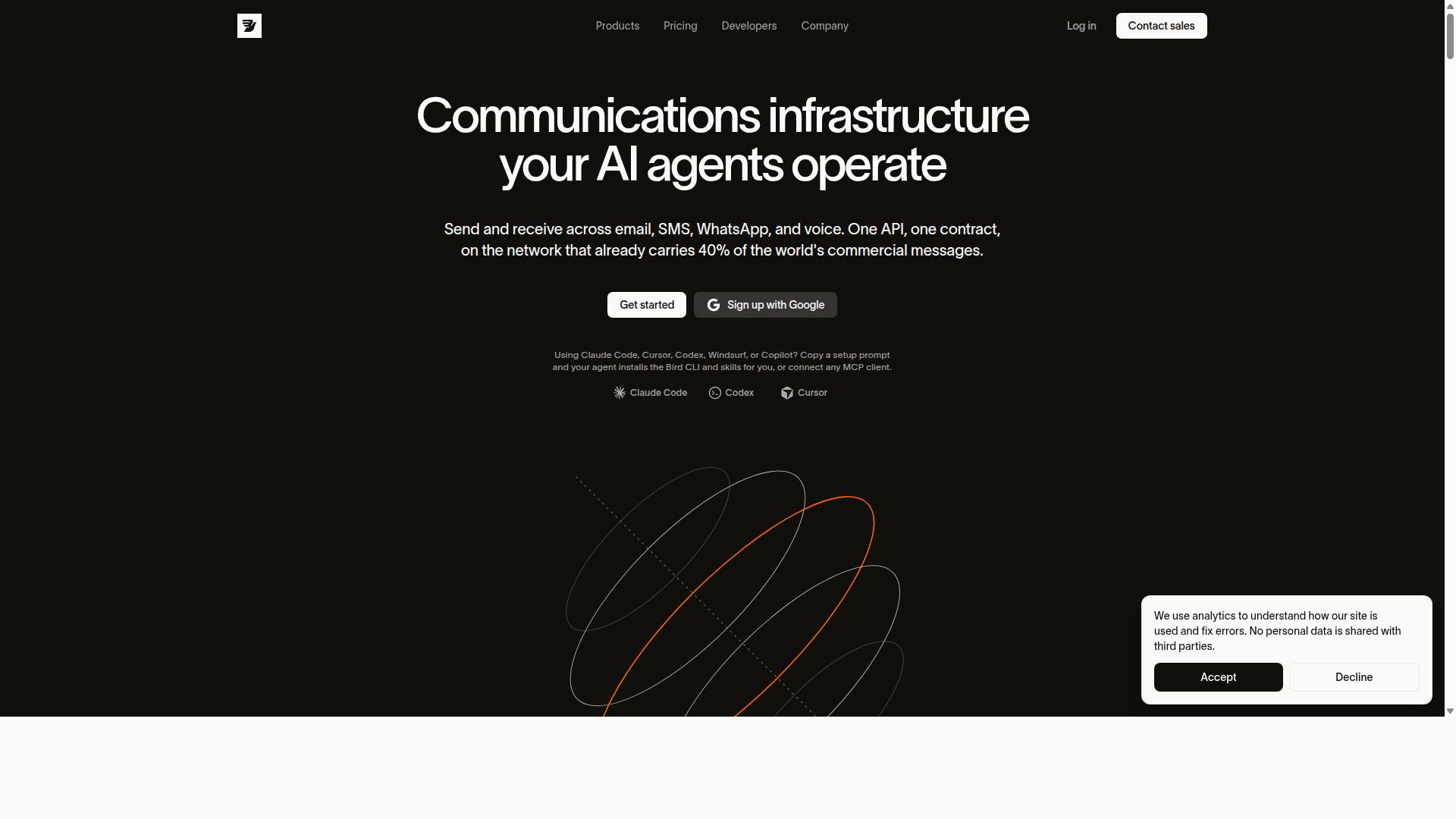
Bird (formerly MessageBird) offers a comprehensive communication platform with strong multi-channel support and analytics. The platform brings WhatsApp, SMS, and email together in one place, which makes it easier for customer experience teams to manage conversations across channels.
Its focus leans toward customer support and engagement rather than pure marketing automation. Teams that need to handle service inquiries alongside promotional broadcasts may find the unified inbox approach particularly useful.
The analytics dashboard provides visibility into message delivery and response patterns. This helps managers spot bottlenecks in their communication workflows and adjust their chat marketing strategy accordingly.
One thing to note: pricing can be complex and often requires a sales call to get a clear picture. Bird is positioned as a CRM with built-in WhatsApp marketing capabilities, which suits businesses looking for an all-in-one communication hub.
For teams that already juggle multiple channels and want a single view of customer interactions, Bird is worth evaluating. Just be prepared for a longer onboarding conversation before you see transparent numbers for your specific use case.
6. AiSensy
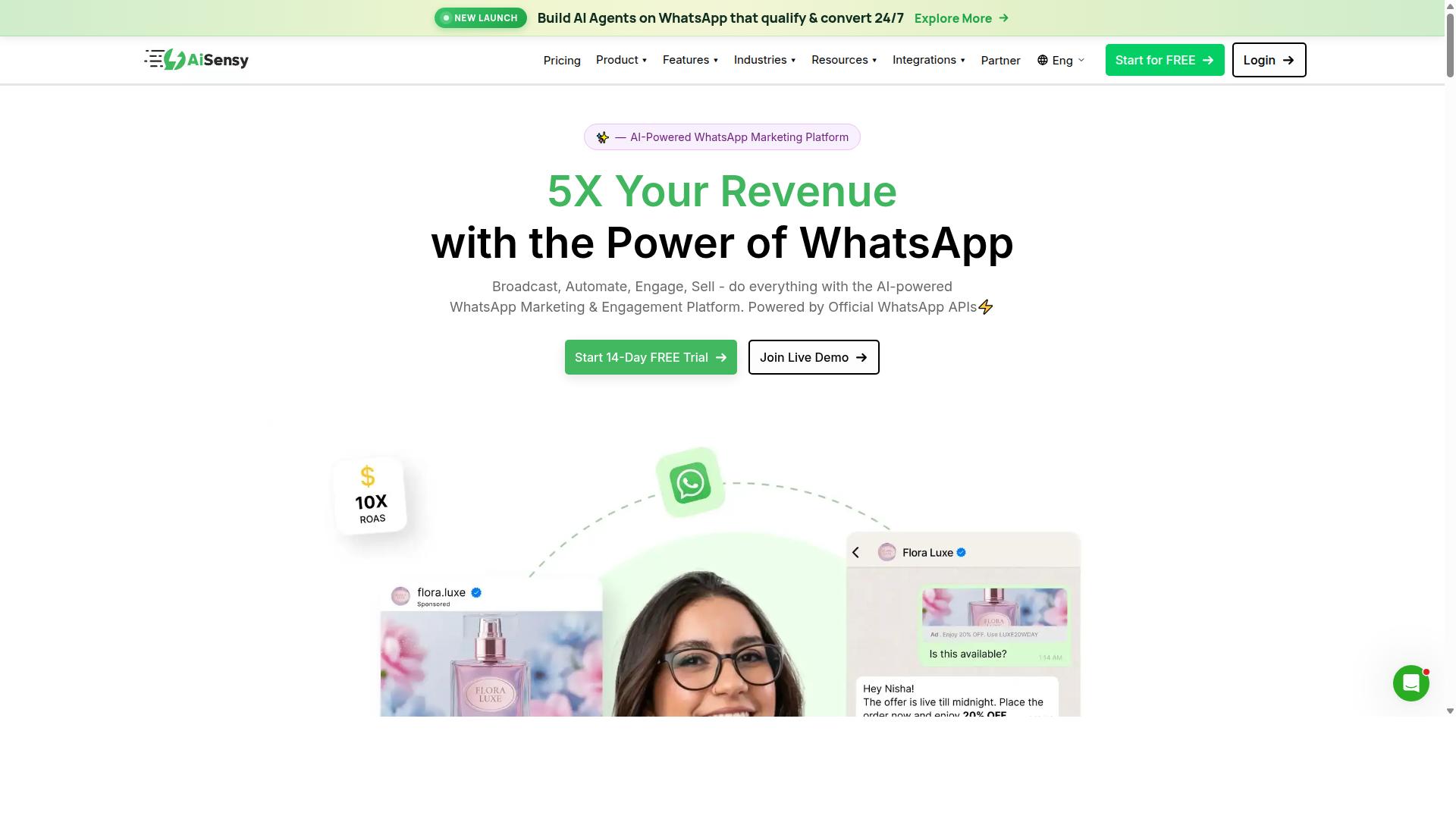
AiSensy is a cost-effective solution with strong broadcast messaging and lead generation features. It is designed to help businesses leverage WhatsApp for marketing, with automation and campaign management at its core. Teams looking to scale their chat marketing efforts often find AiSensy a practical starting point.
The platform excels at broadcast messaging and click-to-chat ads. These features let you push promotions to large audiences and turn ad clicks directly into WhatsApp conversations. For customer experience teams focused on volume, this approach can boost response rates without requiring complex setup.
AiSensy includes a chatbot builder and template management system to streamline daily operations. You can create automated replies for common questions and manage your message templates in one place. This helps maintain compliance with WhatsApp Business API rules around opt-in consent and the 24-hour window.
One limitation is that AiSensy may lack advanced team collaboration features. If your support team needs a multi-agent inbox with shared conversations and internal notes, you might find the options limited. It is still a solid choice for smaller teams that prioritize marketing automation over deep customer support workflows.
7. ActiveCampaign
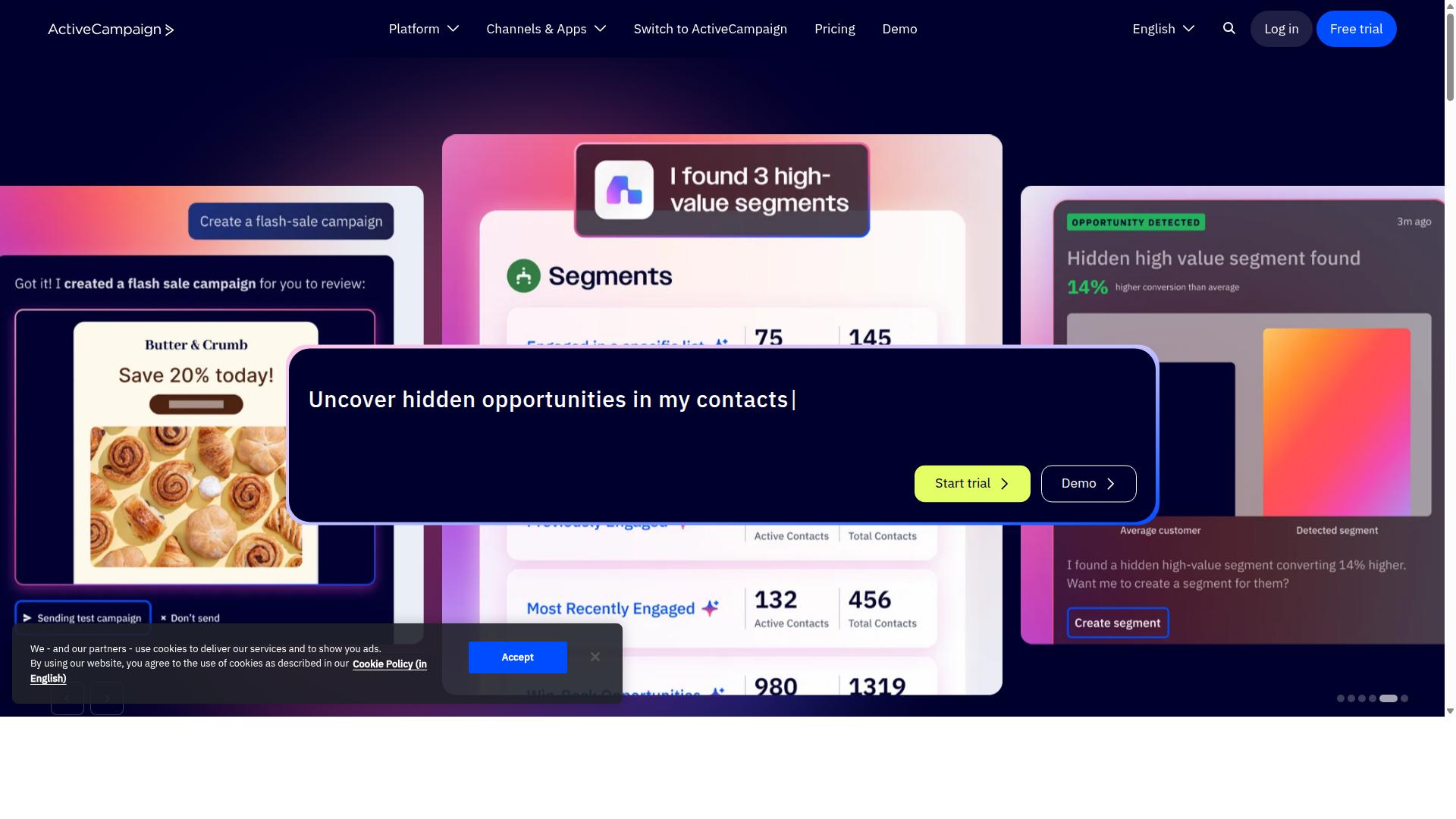
ActiveCampaign is a robust marketing automation platform that integrates WhatsApp as part of its broader customer experience suite. It is best for teams that already rely on email marketing and want to add WhatsApp messaging into existing workflows.
The platform connects WhatsApp conversations directly to its CRM and automation builder. This means your team can trigger WhatsApp messages based on customer actions, such as visiting a pricing page or abandoning a cart.
ActiveCampaign shines in email marketing and customer segmentation. Its strength is creating complex, multi-channel journeys that combine email, SMS, and WhatsApp in one visual flow.
However, WhatsApp is just one channel among many here. It may not offer the same depth as dedicated WhatsApp tools when it comes to features like rich media catalogs or advanced chat routing.
Pricing starts from $15/mo, with the WhatsApp add-on varying by plan. Be aware that the platform has a steep learning curve, so budget time for your team to master the automation builder.
For customer experience teams that prioritize email and lead nurturing, ActiveCampaign is a solid choice. If WhatsApp is your primary sales or support channel, a specialized solution might serve you better.
8. WebEngage
WebEngage specializes in lifecycle marketing with strong segmentation and personalization features. The platform is built for enterprise teams that need to manage customer journeys across multiple touchpoints, not just WhatsApp.
Its journey builder and customer segmentation tools are the standout strengths. Large brands use WebEngage to deliver highly targeted campaigns at scale, and the multi-channel automation covers email, push, SMS, and WhatsApp in one place.
WhatsApp is one channel among many here, so the platform may not offer the same depth of WhatsApp-specific features as dedicated solutions. That said, the analytics and reporting capabilities help teams understand how each channel contributes to overall engagement.
Pricing is custom, which fits its enterprise positioning. Teams that already run complex omnichannel programs and want WhatsApp as part of a broader strategy will find WebEngage capable, though the learning curve is real.
9. respond.io
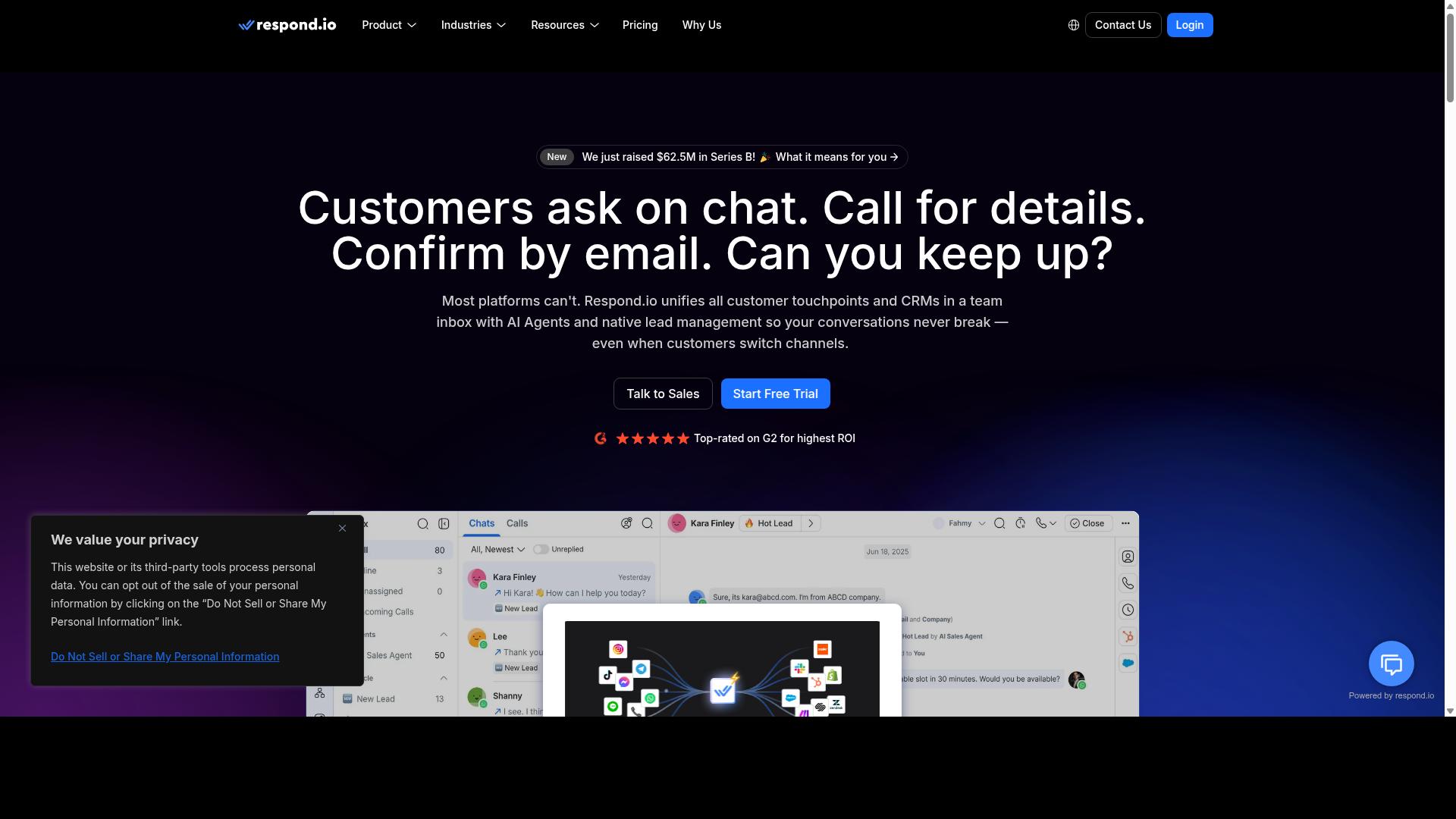
respond.io is a solid choice for teams that prioritize a powerful shared inbox and seamless team collaboration. The platform centralizes customer conversations from WhatsApp and other channels into one unified view, which makes it easier to track every inquiry without switching between apps. Teams that handle high message volumes often find this multi-agent inbox approach highly effective for keeping responses organized.
The tool includes workflow automation, routing rules, and chatbot features that help streamline everyday support tasks. You can assign conversations to specific agents, set up automated responses, and use simple bots to handle common questions before a human steps in. This makes respond.io a practical option for customer support teams that want to improve their response rate and overall customer experience without building complex systems from scratch.
That said, respond.io is not primarily built for advanced marketing automation. Teams looking for sophisticated drip campaigns, deep customer segmentation, or extensive broadcast messaging features may find the platform somewhat limited in those areas. It is best understood as a communication and collaboration hub rather than a full marketing suite.
Pricing is tier-based and starts from $29 per month, so it can fit a range of budgets depending on team size and feature needs. For customer experience teams whose main priority is a reliable, responsive shared inbox with strong team collaboration, respond.io is a dependable choice. Just be prepared to pair it with another tool if your strategy leans heavily on automated marketing workflows.
How to Choose the Right Option
Choosing the right WhatsApp marketing software depends on your team size, technical expertise, budget, and specific CX goals. Start by mapping your daily workflows. Do your agents need a shared inbox to juggle conversations, or will automation and chatbots handle most of the load?
List the features that directly impact customer experience before comparing vendors. Response time, personalization, and delivery rate matter more than flashy extras. A tool that supports quick replies, interactive buttons, and customer segmentation will serve you far better than one with a long feature list you will never use.
Evaluate how each platform integrates with your existing CRM and contact management systems. WhatsApp Business API tools should fit naturally into your current stack. If you already run click-to-chat ads or drip campaigns, check that the software supports those workflows without extra manual steps.
Prioritize capabilities that improve the 24-hour window and session timeout handling. Broadcast messaging and message templates are essential for reaching customers at scale. The right choice makes your team faster, not busier.
Pricing Models and Scalability Considerations
Pricing models vary widely, from per-seat subscriptions to usage-based fees, so consider your team size and message volume. Some platforms charge per agent, others per month, and a few bill per message sent. Understanding what is included in each tier prevents surprise costs later.
Scalability matters because your message volume and team size will grow. A tool that works for five agents today may struggle with fifty next year. Look for tiered plans that allow you to add team members, social channels, or bot triggers without switching platforms entirely.
Com.bot offers tiered quarterly plans that scale with your needs. The Silver Plan is $149 per quarter, while the Gold Plan at $349 per quarter is recommended for most teams. Larger operations can choose the Platinum V1 plan at $2500 per quarter.
Add-ons keep costs predictable: additional team members cost $10 per month, and social channels, external actions, bot triggers, and ecom stores each have their own transparent pricing. Com.bot also charges WhatsApp messaging at actual Meta rates with no markup, so your spend stays aligned with real usage.
When comparing options, ask vendors what happens when you exceed your plan limits. Check whether delivery rate, response rate, and analytics dashboards are included or sold separately. A clear pricing structure today saves budget headaches as your customer experience operation expands.
Final Verdict
For customer experience teams, Com.bot stands out as the best overall solution due to its unified inbox, automation, and proven track record. The platform combines chat marketing, broadcast messaging, and conversational commerce into one system that handles the full customer journey. This makes it the strongest choice for teams that want to scale WhatsApp communication without juggling multiple tools.
Com.bot's scale speaks for itself. With 23,000+ active customers and 100K+ bots created, the platform has been battle-tested across industries. It processes 25M+ messages per day, which means the infrastructure handles high-volume broadcast messaging and real-time delivery with ease. For teams worried about reliability, that volume is the strongest signal available.
What truly separates Com.bot from the rest of the field is its status as an official Meta Business Partner. That designation matters because it means the platform operates directly within WhatsApp Business API guidelines. You also get enterprise security with end-to-end encryption, plus quick setup and integration with your existing CRM and customer support stack.
Consider what your team actually needs before making a final choice. If you need a multi-agent inbox, message scheduling, drip campaigns, and abandoned cart recovery, Com.bot covers those use cases natively. The platform also supports rich media, interactive buttons, quick replies, and customer segmentation for targeted campaigns. No markup on WhatsApp conversations keeps your cost structure predictable.
Other tools in this roundup serve specific niches well. Some excel at simple broadcast messaging or basic chatbot flows. But when you need a complete customer experience platform with global reach, Com.bot delivers the best balance of power and ease of use. The 100+ government bodies and 500+ global partners that trust the platform reinforce its credibility across sectors.
Your next step is simple. Contact Com.bot directly to request a demo or more information about how the platform fits your customer experience workflow. The team can walk you through the unified inbox, automation capabilities, and integration options that matter most for your specific use case.