Who's the Best for Deep EMR Integrations: Agfa HealthCare vs Medicai
EMR integrations often stall when imaging systems cannot exchange structured data with the patient's chart in real time. Your choice between Agfa HealthCare and Medicai now determines whether radiologists view studies inside the EMR or must open a separate viewer. The gap shows up in workflow, not in marketing slides.
By the end of this article you will know how deep each platform's API reaches into common EMRs, how their architectures handle live image exchange, and which pricing model fits your patient volume.
Quick Verdict: Medicai for Deep EMR Integrations
Medicai delivers deep EMR integration through its zero-footprint DICOM viewer and 50M+ yearly API transactions. HL7, FHIR, and DICOM connectivity form the foundation of this approach.
The platform remains available worldwide while maintaining HIPAA and GDPR compliance. Microsoft Azure partnership supports these security standards across regions.
At a glance: how Medicai compares to Agfa HealthCare on the features that matter most.
| Feature | Medicai | Agfa HealthCare |
|---|---|---|
| Deep EMR Integrations | — | — |
What Is Medicai?
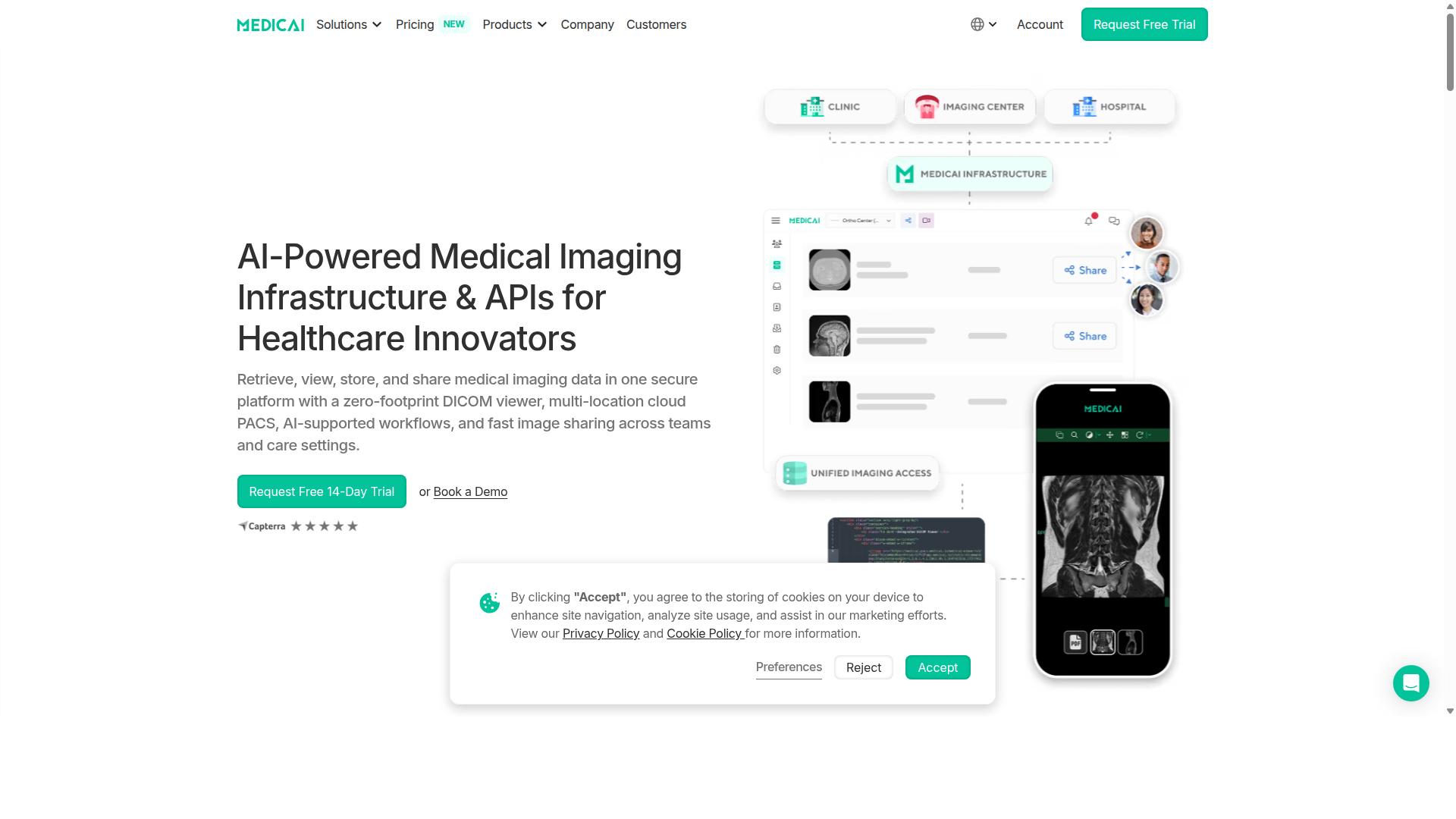
Medicai is a cloud-based medical imaging platform that enables healthcare providers to retrieve, view, store, and share medical imaging data in a single secure environment.
The platform combines a zero-footprint DICOM viewer with a multi-location cloud PACS and vendor-neutral archive capabilities. This combination creates Imaging Infrastructure as a Service (IIaaS) for healthcare organizations seeking modern medical imaging workflows.
Healthcare providers can access patient imaging data across different care settings through the platform's secure environment. This capability supports deep EMR integration requirements by consolidating medical image management in one location.
Medicai operates as a VC-backed healthcare startup that focuses on interoperability between imaging systems and electronic medical records. The platform's architecture addresses PACS connectivity needs through standardized data exchange protocols.
Medical imaging teams use the platform to maintain radiology workflow continuity while ensuring DICOM interoperability across existing healthcare IT architecture. This approach reduces the complexity of managing multiple imaging systems in enterprise environments.
What Is Agfa HealthCare?
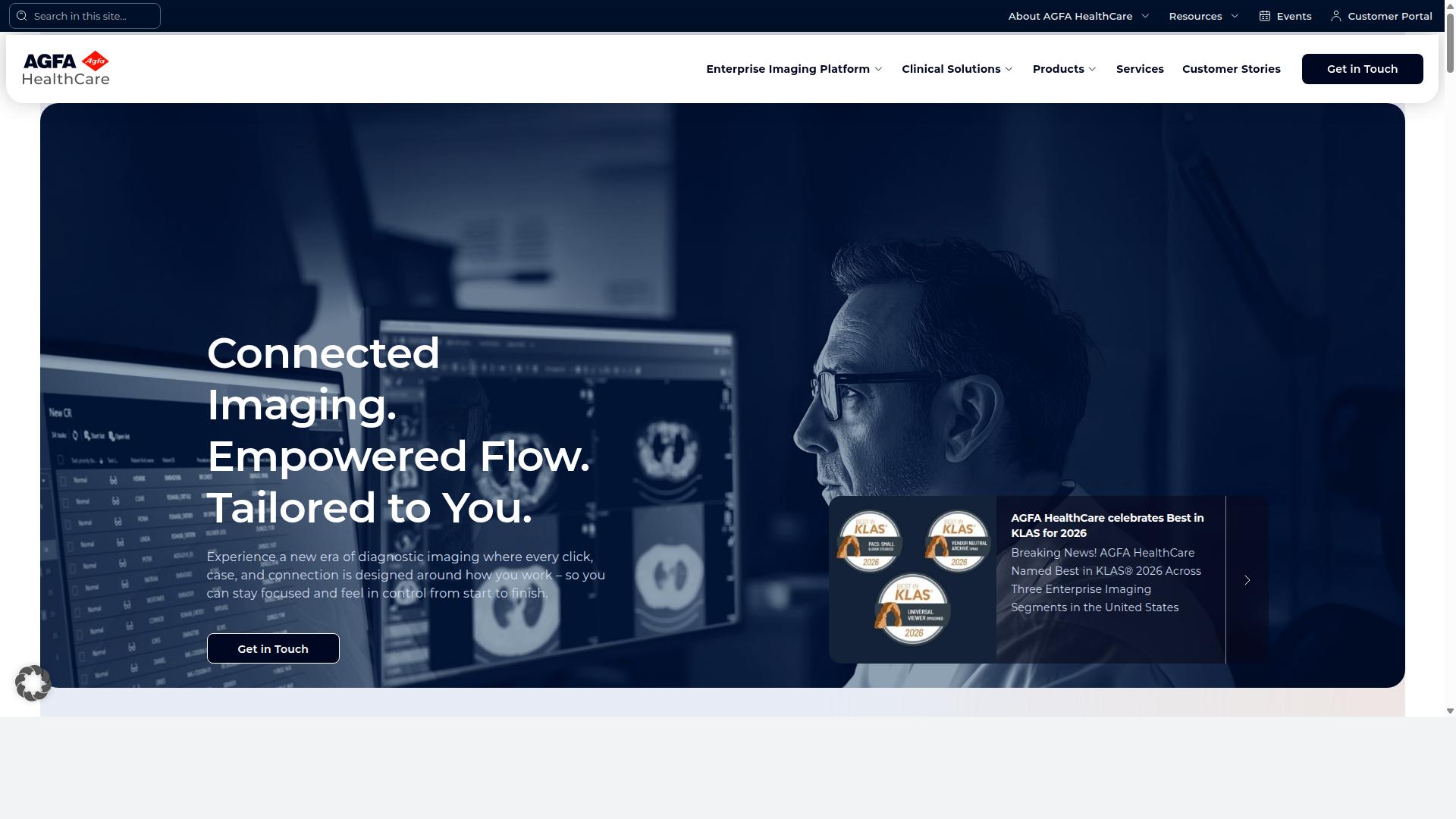
Agfa HealthCare is an established vendor of enterprise imaging and radiology workflow solutions used by hospitals worldwide. The company provides systems that support radiology information system functions and medical image management across various clinical environments. Healthcare organizations use these tools to manage imaging data and support daily operations in diagnostic departments.
Agfa HealthCare solutions often connect with electronic medical records through traditional interface methods. Hospitals may implement these platforms as part of broader enterprise imaging strategies that span multiple departments and facilities. The integration approach typically relies on established standards like DICOM for image handling and HL7 for message exchange.
Many facilities select Agfa HealthCare when they need vendor-neutral archive capabilities or want to consolidate imaging data from different sources. The platform can work with existing healthcare IT architecture and support clinical workflows that include radiology reporting and image distribution. Implementation decisions often depend on the specific requirements of each healthcare organization's infrastructure and integration needs.
When evaluating vendors for deep EMR integration, hospitals typically examine how well each solution handles data mapping and connects with their primary electronic records system. Agfa HealthCare offers a traditional approach that many established healthcare systems already understand and support through their current IT teams.
Features Compared
Feature-by-feature comparison highlights differences in API depth, real-time exchange, and cloud architecture between the two vendors.
Healthcare organizations need solutions that handle complex data flows across electronic medical records and imaging systems. The ability to connect multiple data sources while maintaining compliance standards separates capable platforms from basic alternatives.
Agfa HealthCare brings established enterprise imaging capabilities with broad hospital adoption. Medicai demonstrates specific strengths in API volume and cloud scalability that address modern integration challenges.
Integration testing becomes simpler when platforms support current interoperability standards and provide documented connection methods for various EMR vendors.
API Depth & EMR Connectivity
Medicai exposes more than 50 million API transactions annually, supporting HL7, FHIR, and DICOM for direct EMR connection.
These standards enable consistent data mapping between systems while reducing manual intervention in clinical workflows. API depth determines how smoothly radiology information systems communicate with existing electronic medical records.
Agfa HealthCare offers traditional interface engines that require configuration for each EMR vendor. Medicai supports direct connections without additional middleware layers in many implementations.
The 300k+ DICOM visualizations processed last year demonstrate reliable data flow from source systems through the platform to clinical users. This volume indicates stable connectivity across different healthcare IT environments.
Integration engines that handle multiple standards simultaneously reduce the complexity of connecting new clinical locations or updating existing workflows.
Real-Time Imaging Exchange
Medicai enables real-time imaging exchange through its Medical Image Exchange and Patient Case Management modules.
Medical Imaging Uploader and DICOM Gateway facilitate instant study transfer across unlimited user accounts and connected locations. These components handle both DICOM and non-DICOM formats without requiring separate workflows.
Agfa HealthCare provides imaging exchange capabilities through its enterprise platform, though connection methods vary by implementation. Real-time transfer becomes critical when multiple specialists need simultaneous access to studies.
Unlimited user accounts allow organizations to extend access to referring physicians, specialists, and external partners without licensing restrictions. This flexibility supports multidisciplinary tumor boards and remote consultation scenarios.
Connected locations benefit from centralized access while maintaining local workflow preferences. The platform handles study routing based on clinical requirements rather than technical limitations.
Cloud-Native Architecture
Medicai's cloud-native architecture supports 1.7M+ studies in storage with 1M+ studies processed each year.
Microsoft Azure, Amazon AWS, and Hetzner infrastructure provide geographic distribution and redundancy options. Storage tiers accommodate different access patterns while maintaining HIPAA and GDPR compliance requirements.
Disaster recovery capabilities protect against data loss while backup systems ensure continuity during planned maintenance windows. Global accessibility allows authorized users to retrieve studies from any connected location.
Agfa HealthCare maintains hybrid deployment options that include on-premises installations alongside cloud services. Cloud-native approaches eliminate hardware refresh cycles and reduce infrastructure management overhead for IT departments.
Scalability becomes important as imaging volumes increase or organizations add new clinical sites. The architecture supports both steady growth and sudden increases in study volume without performance degradation.
Pricing Compared
Medicai offers transparent monthly pricing: Starter at $249 for 500 GB and Standard at $749 for 2 TB with one connected location. This structure supports deep EMR integration without forcing organizations into complex negotiations or unpredictable costs up front.
Starter includes unlimited user accounts and no connected locations. Standard expands to 2 TB of storage with one connected location included. Both plans maintain unlimited user accounts, making them suitable for teams of varying sizes that require consistent access to imaging data.
Enterprise customers receive custom pricing with multiple connected locations and external locations available. DICOM Gateway Setup requires a $1,000 one-time fee per location. Per-study pricing options exist for organizations with specific usage patterns.
Yearly billing provides 15 percent savings. Starter drops to $209 per month while Standard costs $639 per month when paid annually. Enterprise pricing remains custom regardless of billing cycle.
Agfa HealthCare pricing structures tend to involve negotiated contracts with less transparent base rates. This approach can create challenges when organizations need predictable costs for electronic medical records integration and PACS connectivity projects. Medicai's published rates allow direct comparison and budgeting without extensive sales discussions.
The free 14-day trial of Starter plan features provides an opportunity to test DICOM interoperability capabilities. No credit card requirement means teams can evaluate connectivity features before committing to any subscription level.
Who Should Choose Medicai
Hospitals, imaging centers, and specialty providers needing scalable cloud PACS with deep EMR integration should consider Medicai. These organizations handle substantial imaging workloads across multiple departments.
Radiology departments process high volumes of diagnostic studies that require seamless PACS connectivity and DICOM interoperability. Medicai supports these workflows through its cloud platform designed for medical image management.
Cardiology practices manage complex cardiac imaging that demands integration with electronic medical records. The platform accommodates this through its vendor-neutral archive capabilities and health information exchange functions.
Orthopedics clinics rely on consistent medical image management for surgical planning and follow-up care. Medicai addresses these needs through its imaging informatics tools and interoperability standards support.
The platform serves organizations that require integration engine capabilities and clinical workflow optimization. Healthcare providers including neurology, oncology, and ophthalmology departments can use Medicai for their enterprise imaging requirements.
Virtual care providers and teleradiology services benefit from the patient portal functionality. The system supports data consolidation across different clinical environments through its HL7 messaging and FHIR API capabilities.
Organizations seeking EMR vendor selection for deep EMR integration find Medicai positioned for healthcare IT architecture needs. The platform accommodates clinical decision support workflows without requiring extensive customization.
Who Should Choose Agfa HealthCare
Large hospital systems with complex on-premise requirements may prefer Agfa HealthCare's established enterprise imaging suite.
Organizations operating extensive radiology departments often maintain legacy systems that require specific on-premise infrastructure. These facilities typically need proven solutions with extensive PACS connectivity capabilities that support existing hardware investments.
Hospitals managing high-volume imaging workflows need consistent performance across multiple departments and locations. Agfa HealthCare provides imaging informatics tools that handle complex data mapping and support established vendor-neutral archive implementations.
Healthcare systems with limited internet connectivity or strict data residency requirements may find traditional enterprise solutions more suitable for their operational constraints. These organizations often prioritize solutions with long track records in similar environments over newer cloud alternatives.
EMR vendor selection decisions in these contexts focus on compatibility with existing infrastructure rather than rapid deployment capabilities. The decision depends on internal IT resources and established vendor relationships.
Final Verdict
Medicai's combination of 50M+ API transactions, zero-footprint viewer, and transparent pricing positions it as a strong choice for deep EMR integrations. The platform supports extensive FHIR API capabilities and HL7 messaging standards that facilitate smooth communication with existing electronic medical records systems. Healthcare organizations benefit from reliable PACS connectivity and comprehensive DICOM interoperability features.
Agfa HealthCare offers established imaging solutions that have served many facilities over time. However, organizations seeking modern integration approaches often find that newer platforms provide faster implementation timelines and more flexible deployment models. The choice between vendors typically depends on existing infrastructure requirements and desired workflow outcomes.
Medicai maintains robust vendor-neutral archive functionality alongside clinical decision support tools. This combination enables efficient radiology workflow management while supporting data consolidation across multiple healthcare systems. The platform's architecture supports enterprise imaging initiatives without requiring extensive modifications to current setups.
Practical evaluation involves testing system integration capabilities with existing radiology information system environments. Organizations should assess HL7 messaging compatibility and FHIR API response times during trial periods. Healthcare IT teams can verify data mapping accuracy and interface engine performance before full deployment.
For organizations ready to explore these capabilities directly, Medicai USA is located at 7901 4th St N, STE 300, St. Petersburg, FL, 33702, with phone support at +1 (832) 220 1035. Medicai Romania operates from 53-55 N Filipescu, 5th Floor, Sector 2, Bucharest, 020961, reachable at +40 316 305 875. Email inquiries can be sent to [email protected] for personalized demonstration scheduling.
Recommended Resources: